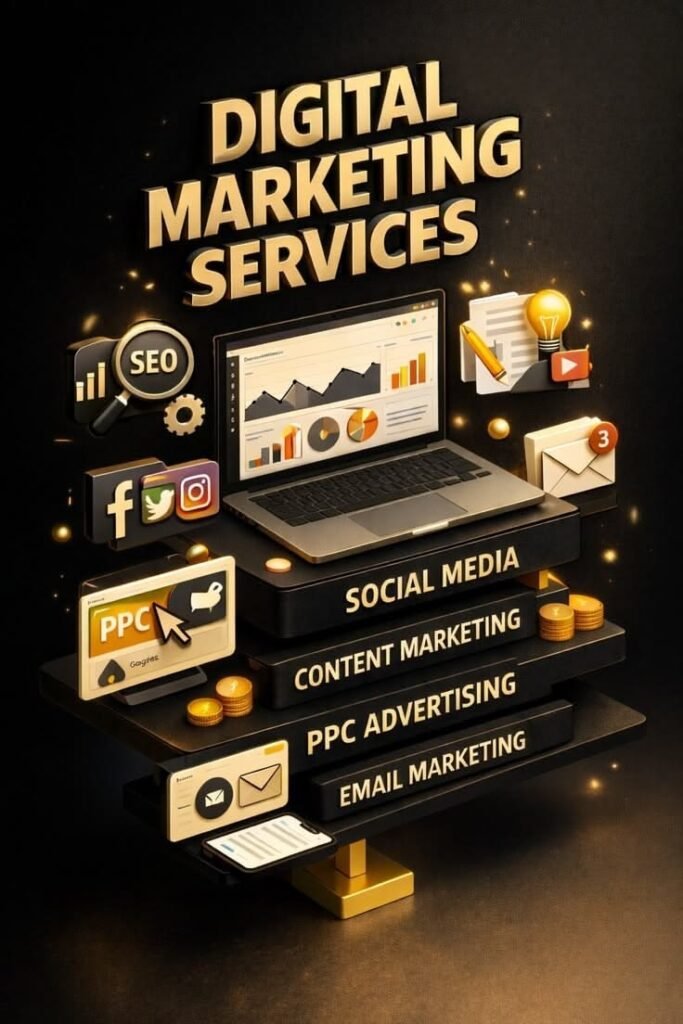
Digital Marketing for Business Growth: 7 Effective Strategies
Digital marketing for business growth helps businesses improve their online visibility, reach potential customers, and promote their products and services. In today’s competitive digital world, businesses need effective online strategies to attract their target audience and build a strong brand presence. By using search engine optimization, social media marketing, content marketing, and online advertising, businesses can discover new opportunities and work toward long-term success.
Digital marketing allows businesses to communicate with customers through websites, search engines, social media platforms, and email. It also provides useful information about customer behavior and marketing performance. Understanding digital marketing for business growth can help small businesses, freelancers, startups, and established companies choose suitable strategies for their goals.
What Is Digital Marketing for Business Growth?
Digital marketing for business growth involves using online marketing channels to increase brand awareness, attract relevant website visitors, generate leads, and develop customer relationships. Businesses can create digital campaigns based on their target audience, marketing budget, and business objectives.
For example, a small business can improve its website content through SEO, share useful information on social media, and use email marketing to stay connected with customers. Combining suitable strategies can help businesses build a stronger online presence and measure their progress.
1. Improve Website Visibility With SEO
Search engine optimization is one of the most important strategies for digital marketing for business growth. SEO helps search engines understand website content and helps users discover relevant information when searching online.
Businesses can improve their website visibility by researching relevant keywords, writing useful content, optimizing page titles, creating clear headings, and adding descriptive image alt text. Internal links also help visitors discover related pages on a website.
For example, a digital marketing freelancer can create service pages targeting relevant customer searches. Publishing helpful articles and maintaining a well-organized website can support long-term visibility. For more information, read Google’s SEO Starter Guide.
2. Build Brand Awareness Through Social Media
Social media marketing helps businesses introduce their products and services to potential customers. Platforms such as Instagram, Facebook, LinkedIn, and YouTube provide opportunities to share updates, educational content, videos, and customer stories.
A consistent social media strategy can help businesses communicate their brand identity and interact with their audience. Businesses should choose platforms that match their customers’ interests rather than trying to use every platform.
Sharing relevant content and responding to questions can strengthen customer relationships. Social media marketing can also direct interested users to a website, where they can learn more about available products or services.
3. Create Valuable Content for Your Audience
Content marketing involves creating useful information that answers customer questions and solves common problems. Blog articles, guides, videos, infographics, and case studies can help businesses demonstrate their knowledge and provide value to their audiences.
High-quality content supports digital marketing for business growth by helping potential customers discover a business and understand its services. For example, a website designer can publish an article explaining how a professional website helps a small business establish an online presence.
Content should be clear, accurate, relevant, and easy to read. Businesses can also link related articles to their service pages to help visitors explore useful information.
4. Reach Potential Customers With Online Advertising
Online advertising allows businesses to promote their products and services to selected audiences. Advertising platforms offer different campaign options, including search advertisements, display ads, and social media promotions.
Businesses can choose their advertising objectives based on whether they want to increase website visits, generate enquiries, promote a product, or improve brand awareness. Setting a budget and monitoring results are important parts of an effective campaign.
For example, a local business may advertise a specific service to people in its service area. However, advertising results depend on factors such as audience targeting, competition, campaign quality, and budget.
5. Use Email Marketing to Build Customer Relationships
Email marketing helps businesses maintain communication with customers who have chosen to receive their messages. Businesses can send newsletters, useful tips, product updates, announcements, and special offers.
A well-planned email campaign can help keep a business connected with its audience. Messages should provide meaningful information instead of sending frequent promotional emails without value.
Businesses should also use clear subject lines, relevant content, and a simple way for subscribers to unsubscribe. These practices help create a better email experience and support long-term customer relationships.
6. Measure Results With Digital Marketing Tools
Measuring performance is essential for understanding whether marketing activities support business goals. Businesses can track website visits, search impressions, clicks, enquiries, conversions, and customer engagement.
Tools such as Google Analytics help website owners understand how visitors interact with their websites. Google Search Console provides information about a website’s performance in Google Search.
Reviewing these metrics helps businesses identify successful activities and areas that need improvement. Instead of making decisions based only on assumptions, businesses can use performance data to refine their marketing strategies.
7. Strengthen Local Visibility and Customer Trust
Local SEO is useful for businesses that serve customers in a particular town, city, or region. Businesses can improve local visibility by maintaining accurate business information, creating relevant location-based website content, and encouraging genuine customer reviews.
For example, a service provider can create a page that explains the services offered in their local area. Clear contact information, useful website content, and consistent business details can help customers understand how to contact the business.
Businesses should provide accurate information and respond professionally to customer feedback. Building trust takes time, but a helpful online presence can support customer confidence and encourage enquiries.
How Digital Marketing for Business Growth Helps Small Businesses
Digital marketing for business growth offers small businesses, freelancers, and startups flexible ways to promote their services. A professional website, useful content, social media activity, and SEO can help potential customers discover a business online.
Small businesses do not need to use every marketing channel at once. They can start by identifying their target audience, choosing suitable platforms, setting realistic goals, and reviewing their progress regularly.
For more information about available services, visit our Digital Marketing Services page. You can also explore our latest digital marketing articles to learn about online marketing techniques.
Tips for Creating an Effective Digital Marketing Strategy
Businesses can improve their marketing efforts by following a clear plan:
- Set clear goals: Decide whether the priority is website traffic, brand awareness, enquiries, or sales.
- Understand your audience: Identify customer needs, interests, and common questions.
- Choose suitable channels: Focus on the platforms that are most relevant to your audience.
- Publish helpful content: Create information that answers questions and explains your services.
- Monitor performance: Review website traffic, engagement, leads, and conversions.
- Improve regularly: Use the results to adjust campaigns and improve website content.
A consistent strategy helps businesses focus their resources and make informed decisions. Results may take time and depend on competition, budget, content quality, and customer behavior.
Conclusion
Digital marketing for business growth helps businesses improve online visibility, connect with potential customers, and build lasting relationships. SEO, social media marketing, content creation, email campaigns, online advertising, and performance tracking each contribute to an effective digital marketing strategy.
Businesses should select techniques that match their goals, audience, and resources. By providing useful content, maintaining a professional online presence, and reviewing results regularly, businesses can improve their marketing efforts and work toward sustainable growth.